Niji's Dream
An AI-powered visual novel game.
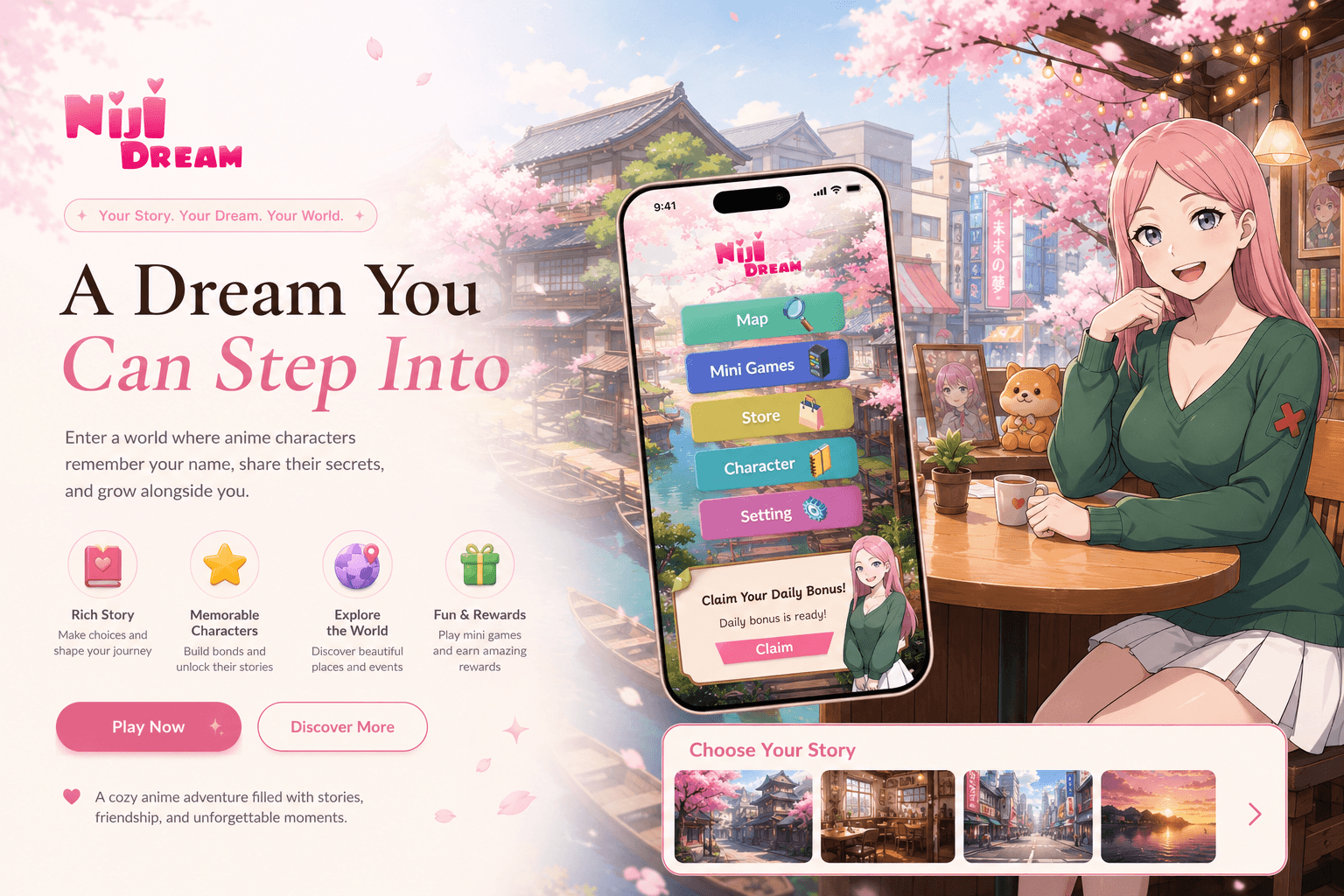
Designing a cozy mobile experience from concept to deployment.
NIJI's Dream is a mobile-first game that brings together visual novel storytelling, AI character interaction, relationship progression, mini-games, and open exploration — inside a single cohesive world. The setting: a vibrant seaside town where every corner holds a memory, a story, or a connection waiting to unfold.
The emotional DNA draws from Japanese anime storytelling, cozy life-simulation games, and the emerging wave of AI companion experiences.
This project has been an incredibly valuable experience for me. It helped shape my understanding of how AI, systems design, and human-centered experiences intersect, and how thoughtful product design can create meaningful impact for users.
My scope on this project went beyond product design. I operated across three functions simultaneously: Product Designer — UX/UI from system architecture to individual interaction states, design system, and engineer handoff. Game Designer — Gameplay loop structure, emotional progression mechanics, character bond systems, and narrative experience design. Product Owner — Product vision, roadmap prioritisation, feature scoping, and cross-functional alignment between design, development, and content.
A mobile game that opens with warmth, not FOMO.
The mobile game market is saturated with high-stimulation titles optimised for aggressive monetisation. What's missing is the opposite: a game built around emotional warmth, gentle pacing, and meaningful daily rituals — especially for an audience that skews toward self-expression and character bonds over leaderboard competition.
The added constraint: the product had to be designed with enough precision and system rigour that a real development team could build from it directly. That raised the stakes on every handoff: specs, component logic, interaction states, and edge cases all had to be airtight from day one.
Transforming companionship from chat to world.
Most AI companion products focus almost entirely on chat. While conversations may initially feel exciting, many experiences eventually become repetitive because there are few meaningful activities outside the chat interface.
The challenge: how might we transform AI companionship from a chat product into a living world where players feel emotionally connected through stories, locations, gameplay, and shared experiences? We wanted users to feel that characters existed beyond conversations.

Three principles that made the experience feel like a world, not a game.
Emotional resonance before retention mechanics
The relationship is the reward. Character bond-building is the core loop — not daily push notifications or streak pressure. XP, gifts, and unlocks are expressions of that bond. Users return because they feel something, not because a mechanic demands it.
Aesthetic consistency as a feature
The visual design isn't decoration — it is the product. Soft pinks, warm creams, Playfair Display headings, Nunito UI. Every screen, from the home feed to the shop, was designed to feel like the same gentle world. Consistency wasn't a polish step — it was a strategic decision that made the experience feel coherent and safe to return to.
Built to scale with a real team
Design precision as a development asset. Components were structured for clean engineer handoff — consistent frame sizing, auto-layout discipline, and a component library built for reuse rather than one-off execution. Co-built alongside the development team to ensure nothing was lost between design intent and shipped product.
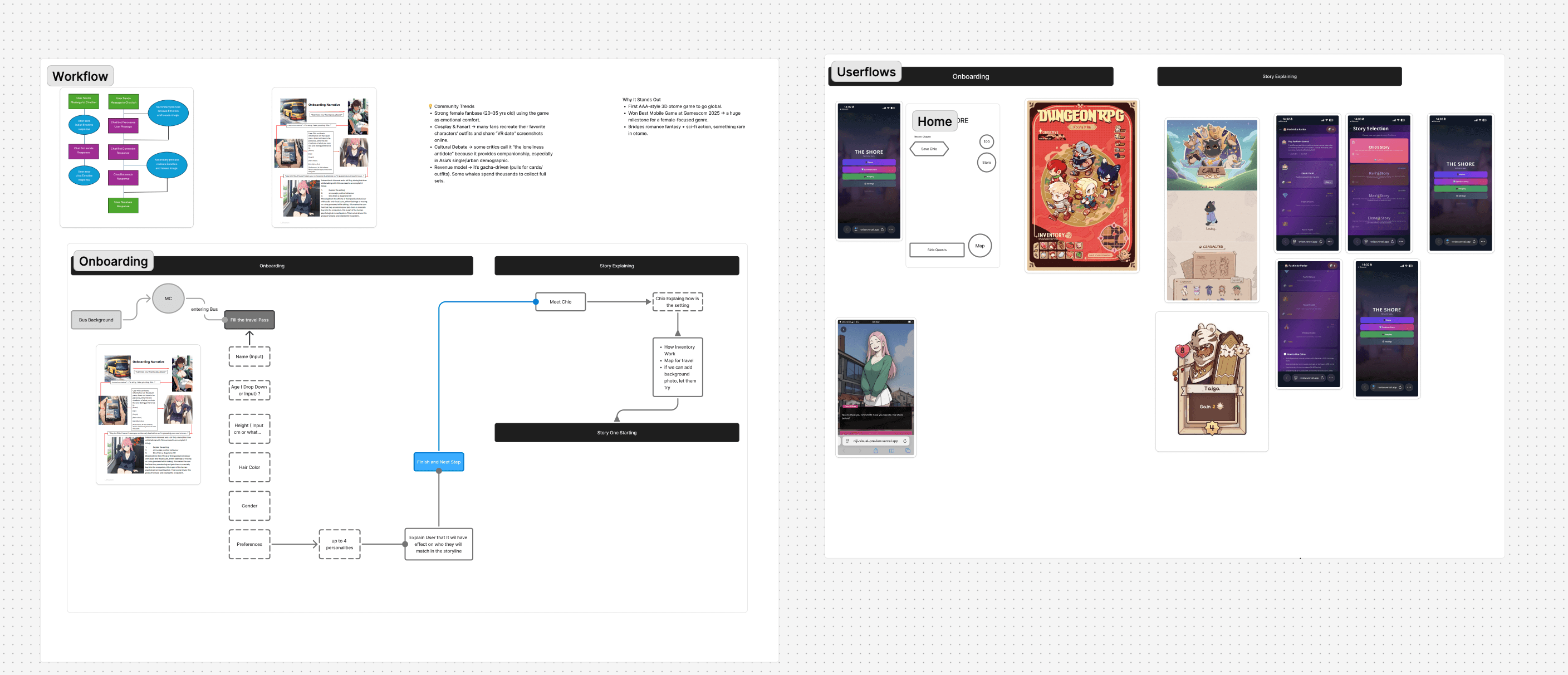
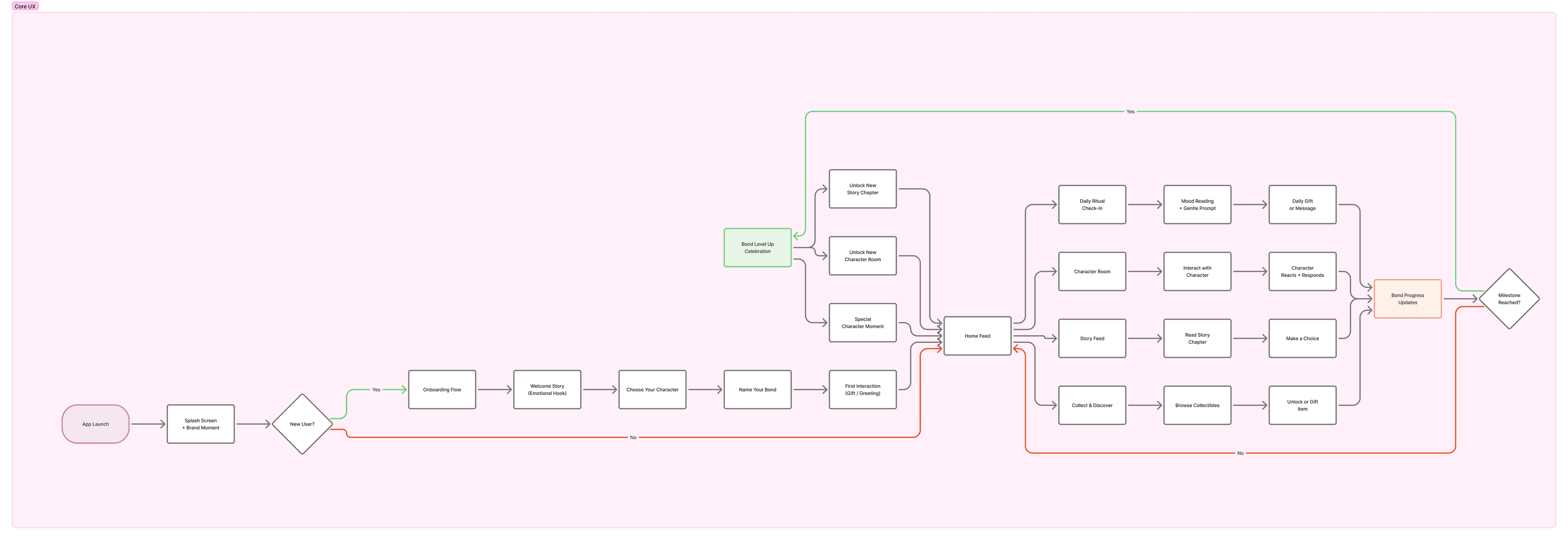
- 01Cozy Before Complex
Every interaction should feel welcoming and low-pressure.
- 02Emotional Progression
Progress should feel like relationship growth, not grinding.
- 03Discover Through Curiosity
Players should naturally explore rather than follow rigid tutorials.
- 04Characters Feel Alive
Characters continue living their lives even when the player is away.
The product experience revolves around four pillars.
Stories
Narrative-driven experiences featuring unique character arcs.
Characters
AI-powered companions with distinct personalities and emotional journeys.
Exploration
Interactive locations across a seaside town.
Mini Games
Relaxed gameplay experiences that reinforce progression.
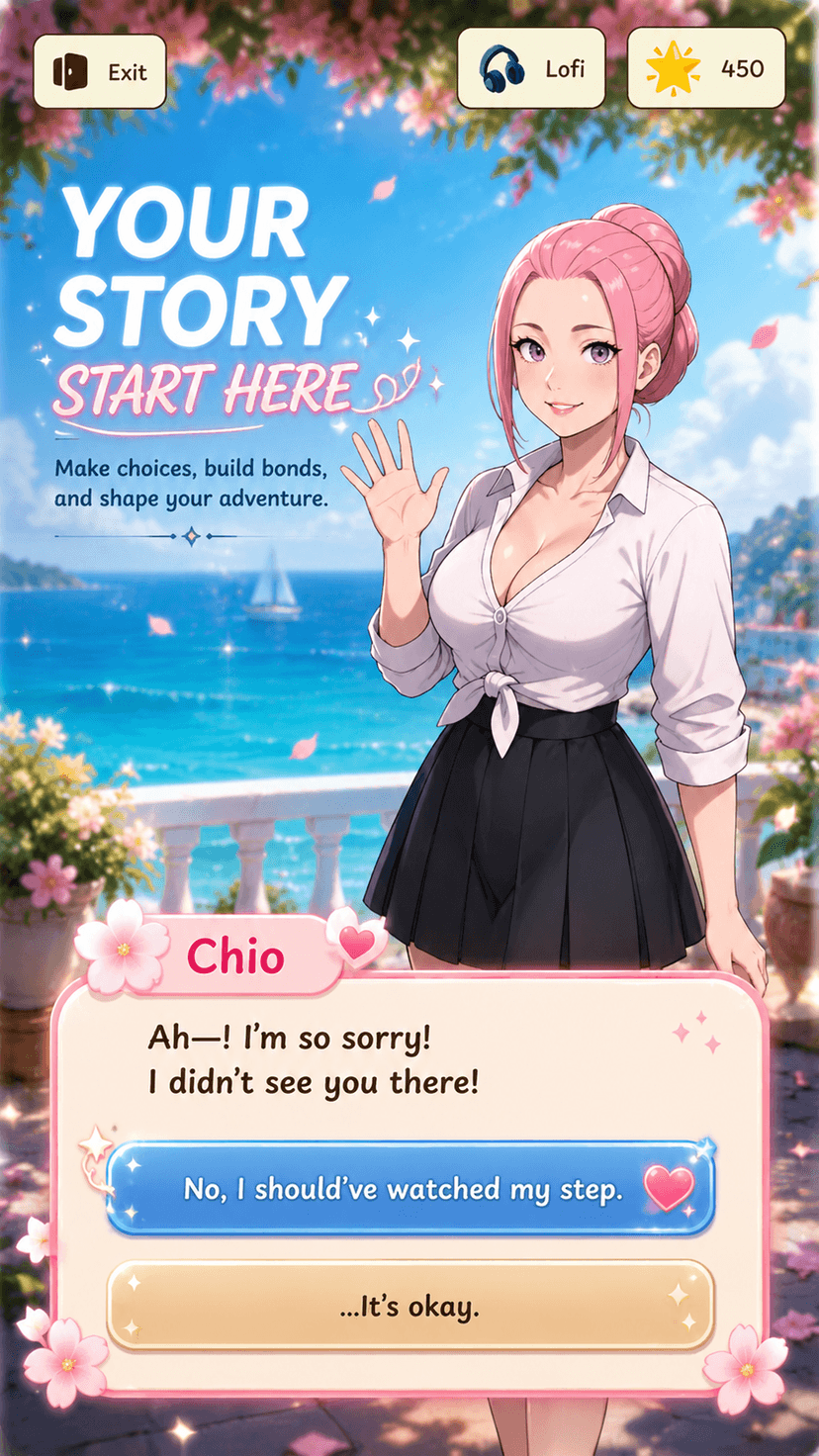
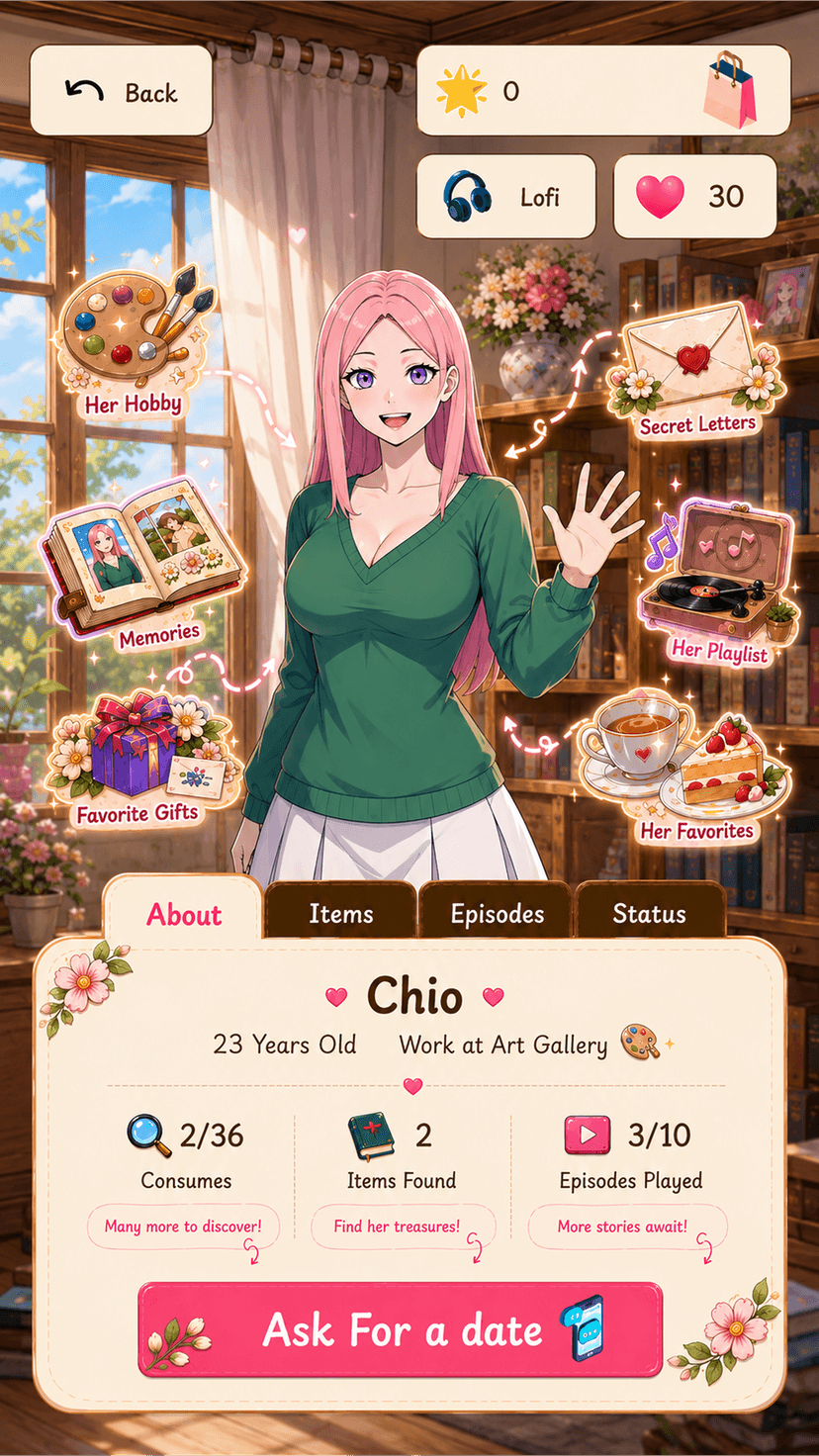
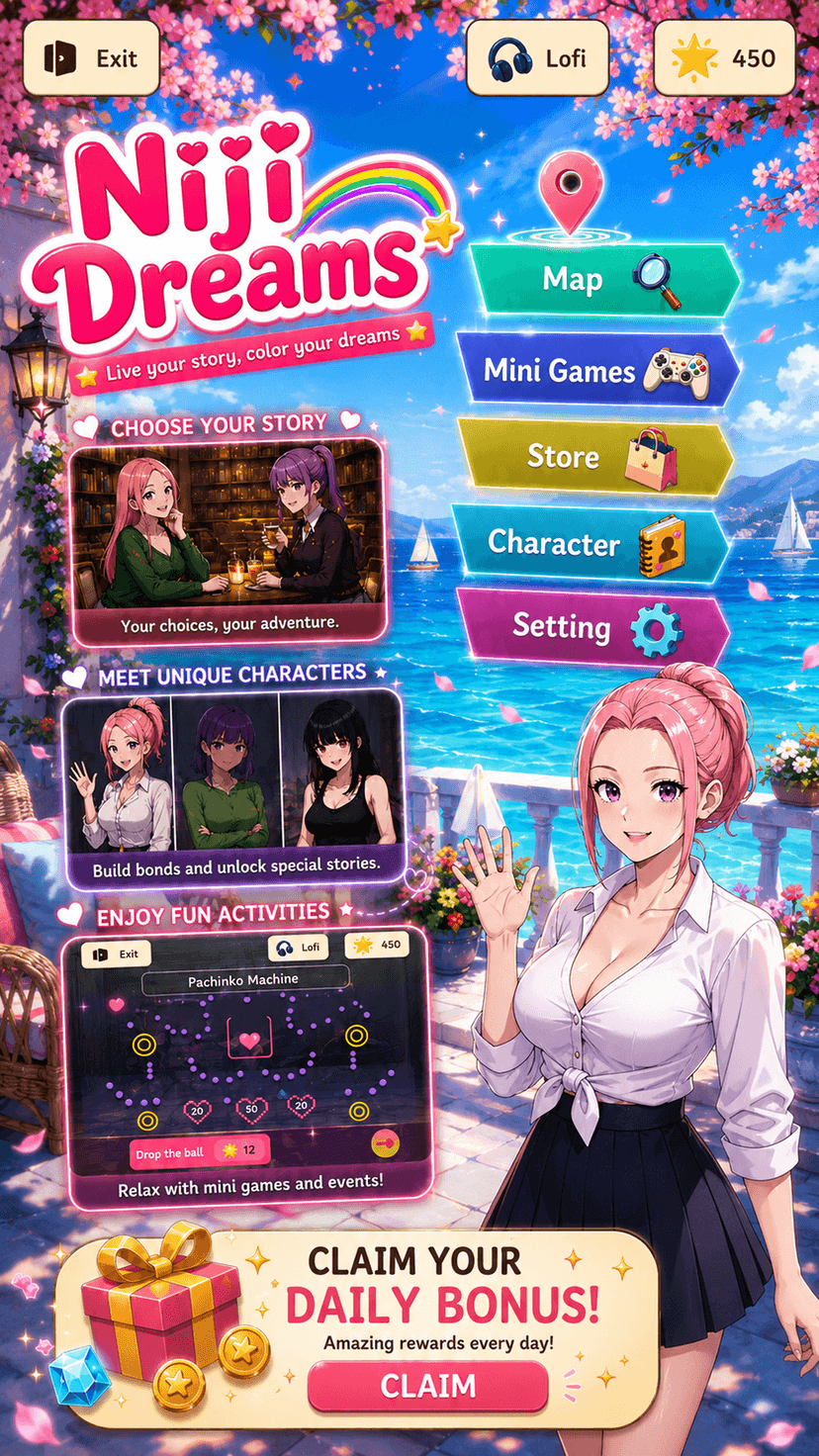
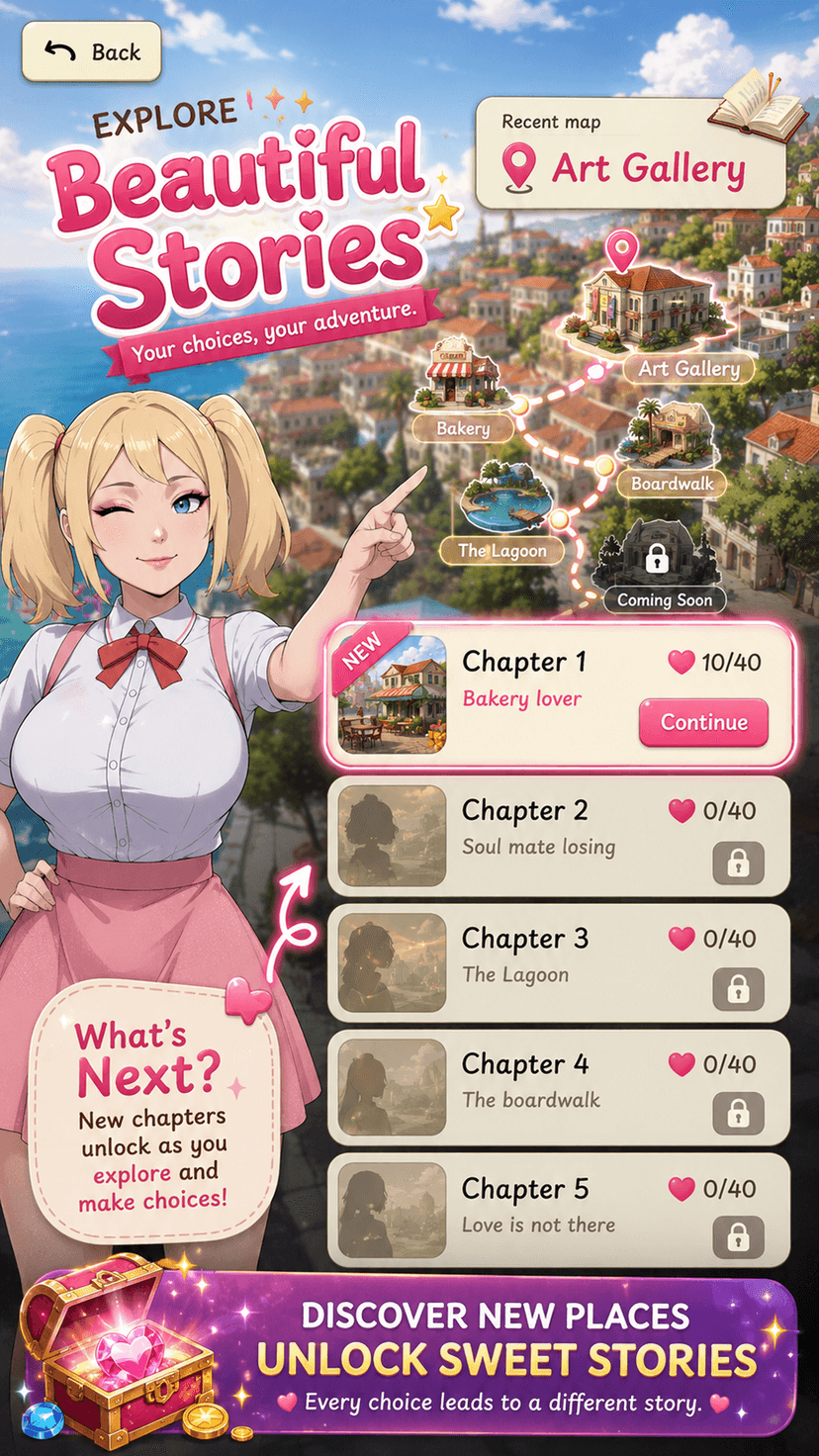
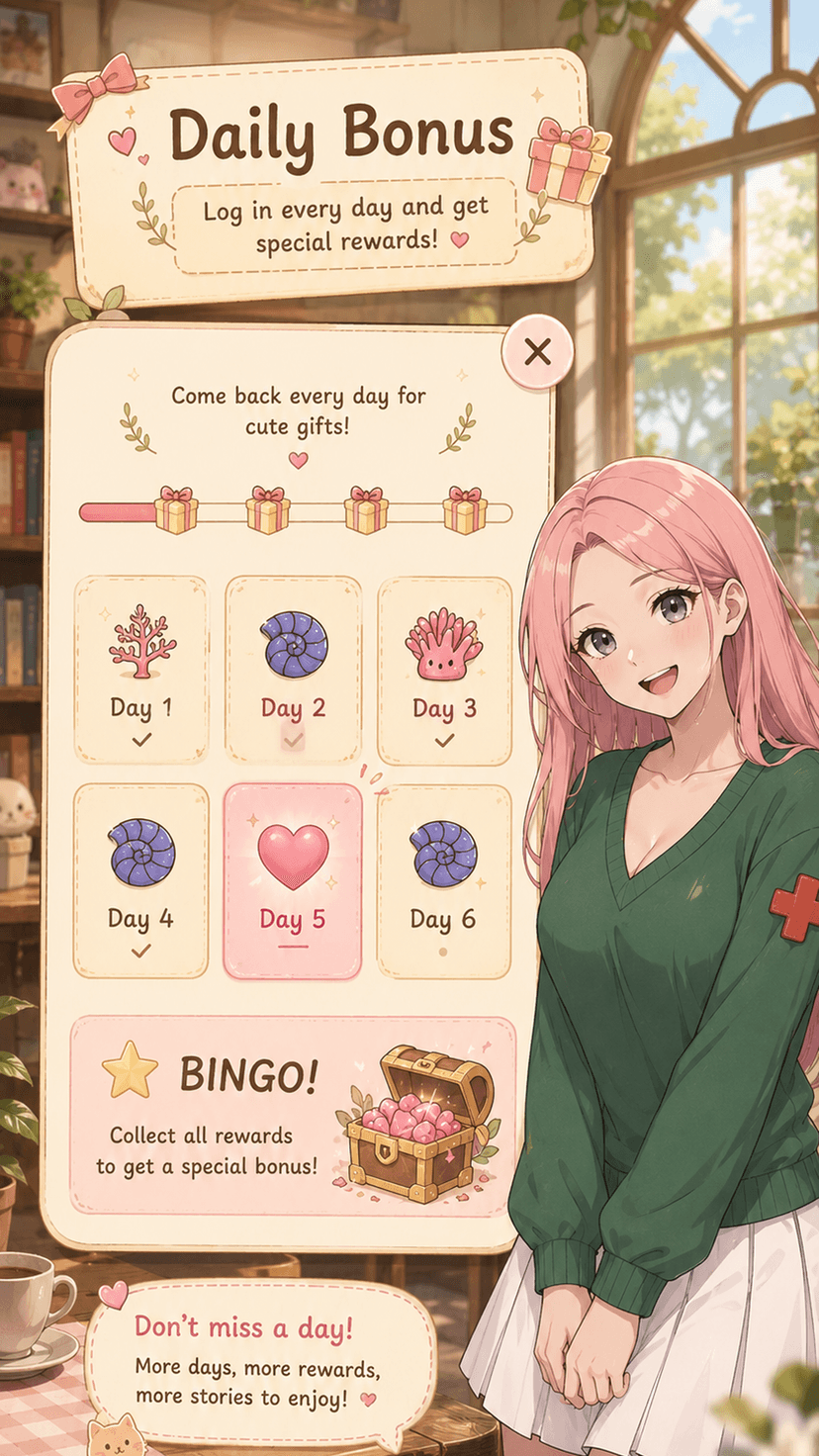
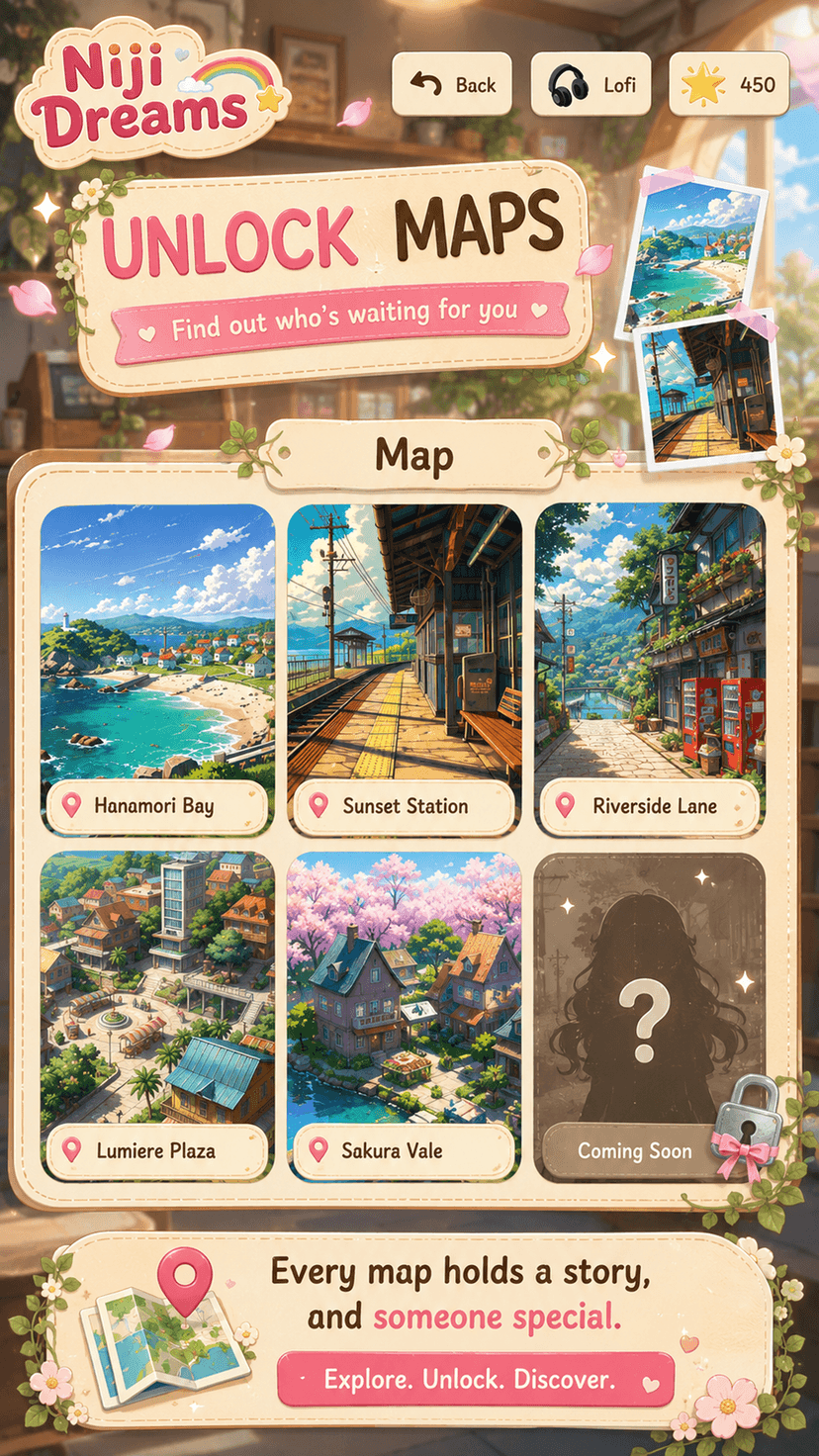
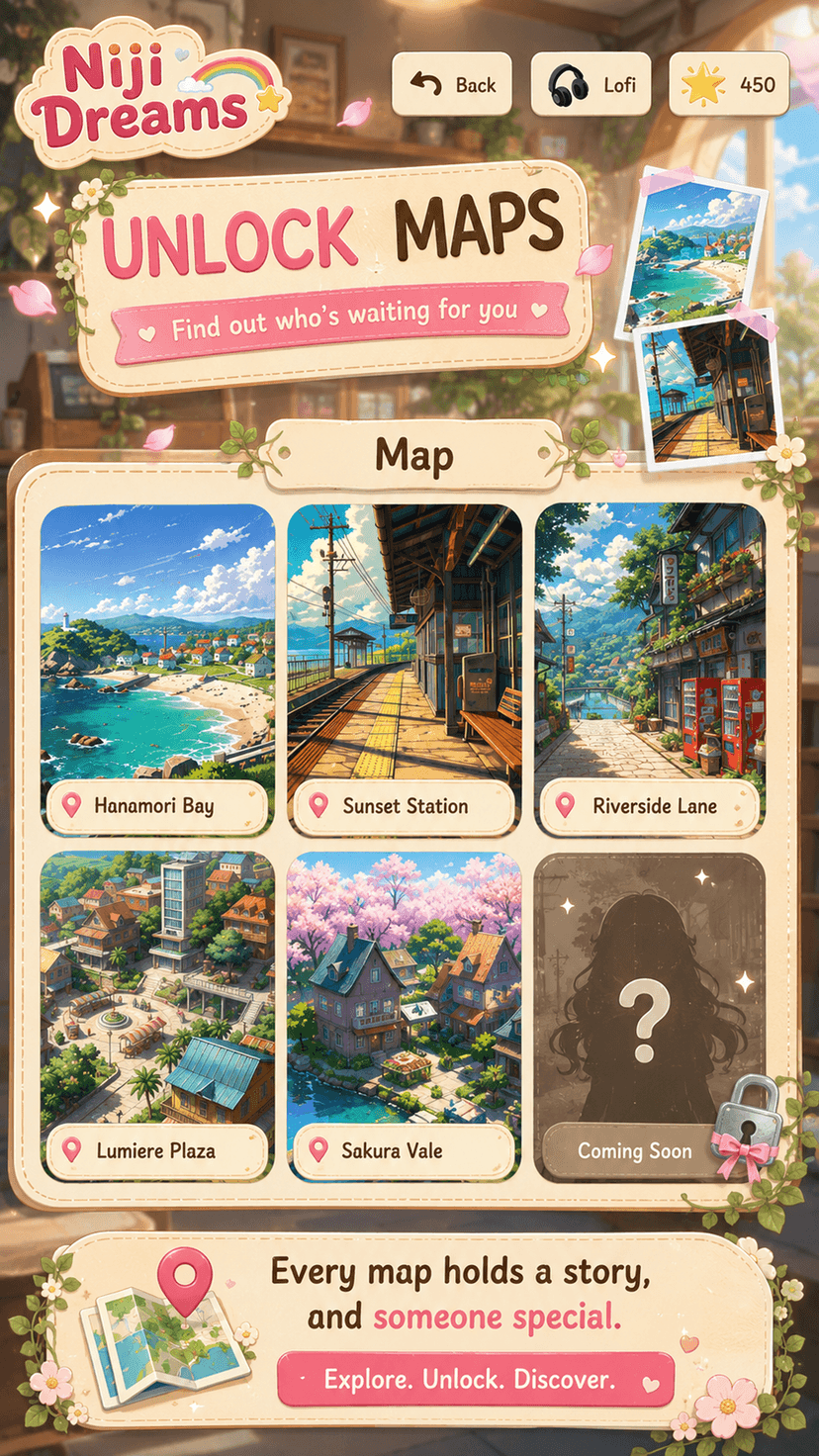
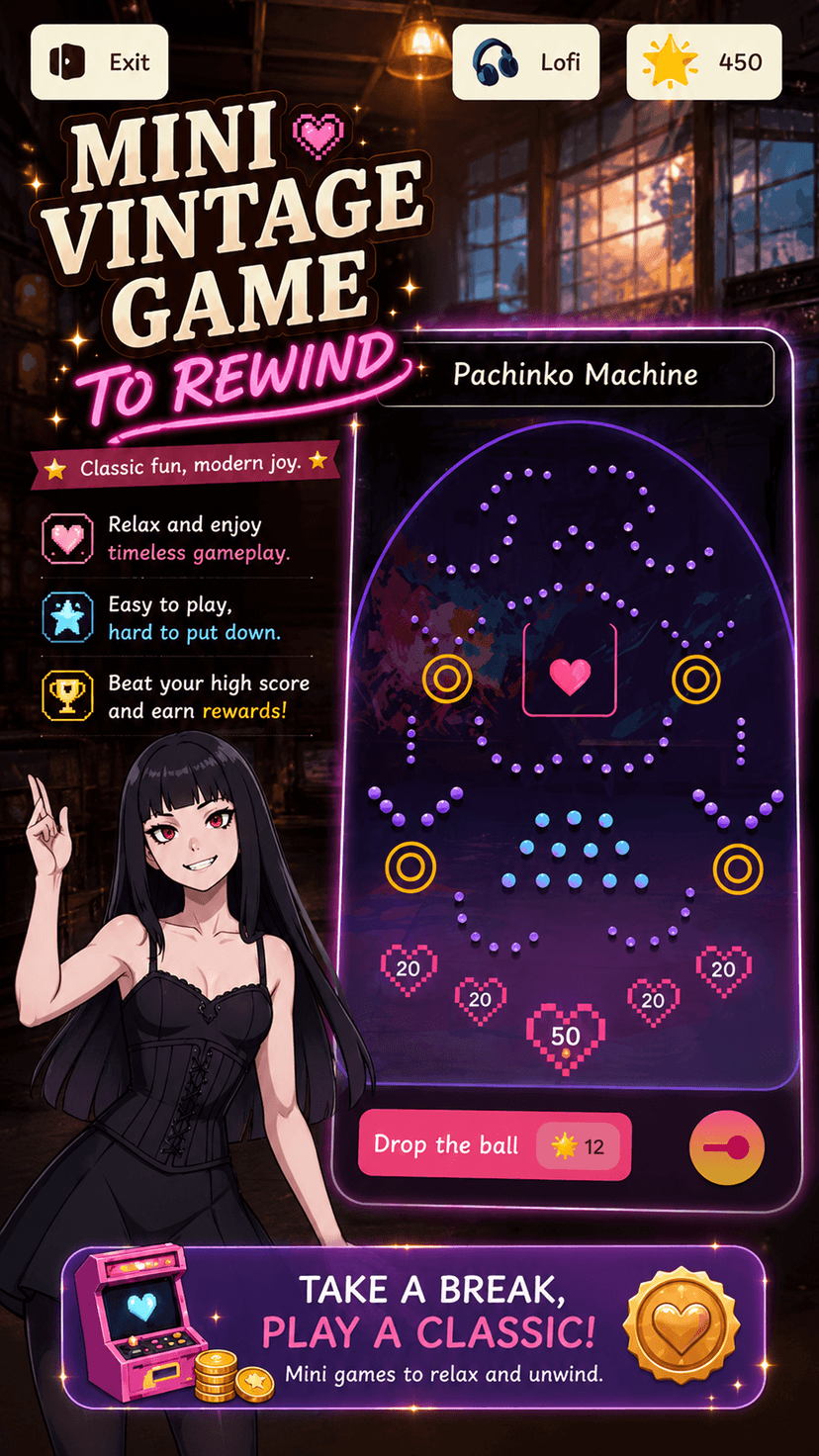
Coming to Google Playstore soon
Five anchors, each a distinct emotional mode.
- 01Home / Bond Screen — warm, intimate
Check in with your character. The first screen each day surfaces bond level, daily greeting, and mood indicator without requiring navigation.
- 02Mark Gallery — curious, expressive
A full-screen masonry grid of collected marks. Locked marks appear softly dimmed with subtle hints, not hard locked states.
- 03Lo-Fi Room — calm, restorative
An ambient room the player customises over time, with lo-fi tracks running in the background. Functions almost like a live wallpaper.
- 04Mini Games — playful, low-stakes
Light play sessions that never punish or pressure the player.
- 05Shop / Gem Economy — aspirational, not pressured
No countdown timers, no scarcity panic. The shop surfaces cosmetics and gifts, not pay-to-win mechanics.
Quality infrastructure built alongside the screens.
As QA lead, I built the entire quality assurance system from scratch alongside the design — treating QA not as a post-design phase but as a design discipline.
Seventy-two test cases across eight feature areas. Structured bug and improvement templates. A four-phase QA workflow — smoke, functional, regression, pre-launch. A device matrix covering primary iOS and Android targets.
The result: the project can hand off to any developer or no-code builder with a clear, professional quality baseline — not just screens.
The hardest design challenge wasn't the UI — it was making restraint feel intentional. Every time a "standard" game mechanic surfaced — countdown timers, streak anxiety, aggressive upsells — the question was whether it served the emotional core of the product. Usually, it didn't.