KMA Real Estate
Designing a property discovery platform from the ground up.
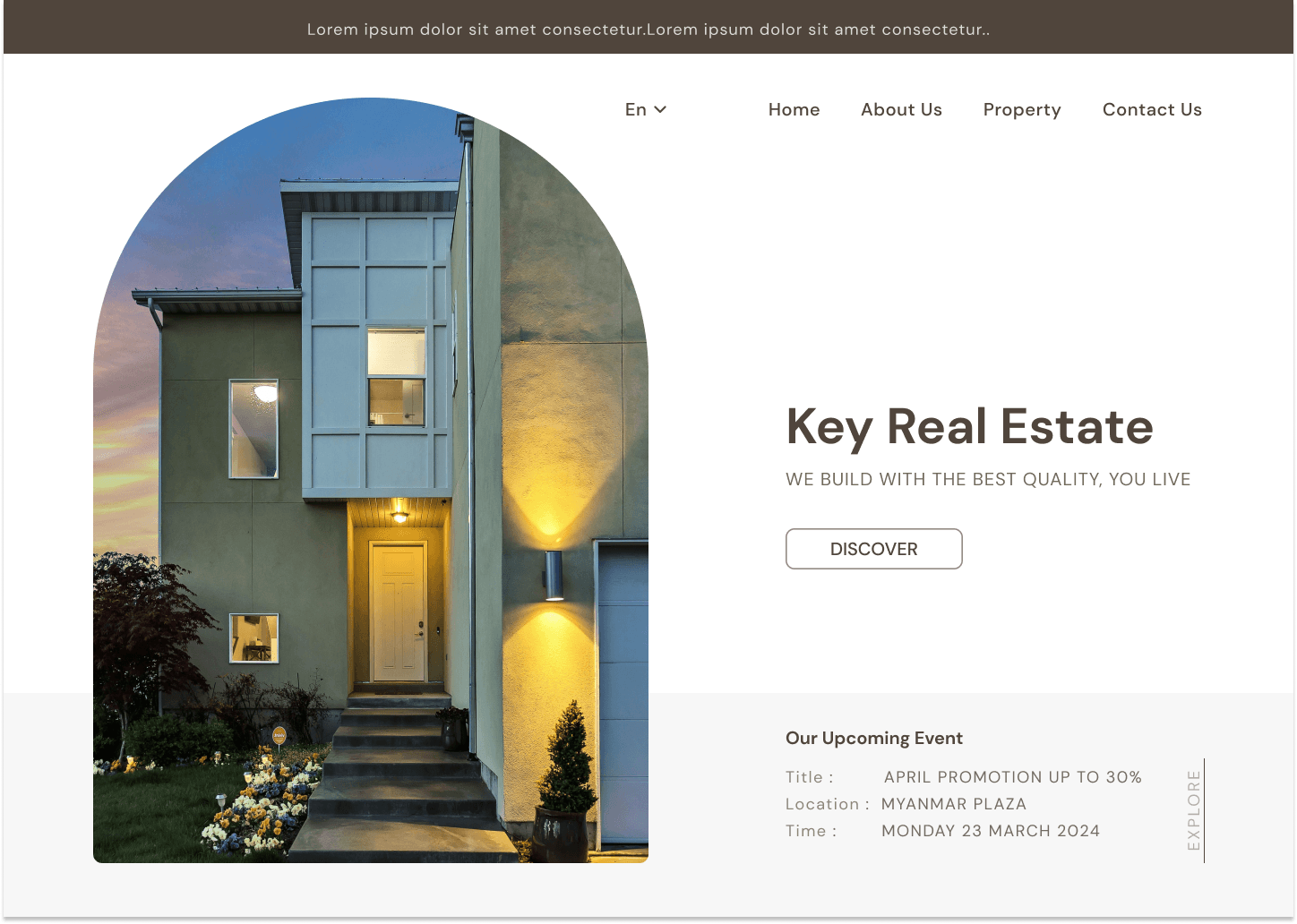
A discovery platform for Myanmar's fragmented real estate market.
Key Real Estate needed a digital platform that could represent the full scope of its property business — multiple developers, multiple townships, multiple property types — in a way that felt navigable rather than overwhelming.
Myanmar's real estate market had no dominant digital discovery platform. Buyers were relying on word-of-mouth, physical showrooms, and fragmented listings. The opportunity was to build something that could become the authoritative place to discover, explore, and understand property in Myanmar — with all the complexity that entails.
A deeply hierarchical inventory model.
Designing for property discovery in Myanmar required confronting a structural challenge most real estate platforms don't face: a four-level hierarchy — Project → Quarter → Series → Unit. A Project is a large development. Within it, Quarters are distinct zones or phases. Within each Quarter, Series define specific plot types or home designs.
This hierarchy is standard in Myanmar's real estate market — but entirely opaque to first-time buyers. The core design challenge was to make this hierarchy feel intuitive without requiring users to understand it first.
What had to be balanced.
Discovery vs. depth
Users searching broadly (just browsing) and users with specific intent (I want a 50×60 plot in Bago) needed the same platform to serve them.
Trust building
Large-ticket purchases require institutional confidence. Developer profiles, financing partners, and physical locations all needed to be surfaced credibly.
Bilingual market
The platform needed to serve English and Myanmar-language users equally well — type rendering, layout density, and navigation patterns all had to flex.
One platform, three valid paths in.
- 01Search-first
Filtered search (property type, buy or rent, location) for users who know what they want. Paired with a "Search from Map" entry point for spatial browsers.
- 02Project-led browsing
Homepage surfaces curated projects by name and imagery. Clicking in takes users through the hierarchy naturally: Project → Quarter → Series.
- 03Developer-led browsing
An "About Our Developers" section and dedicated developer profiles give users another way to anchor trust and narrow discovery.
Home Page
Calls made deliberately.
- 01Making the hierarchy invisible
Rather than expose the Project → Quarter → Series taxonomy, each level was designed to feel like a natural next step. Users navigate deeper without ever needing to understand the abstraction.
- 02Map as a first-class citizen
"Search from Map" was surfaced as a co-equal entry point immediately below the main search bar — respecting how buyers actually make property decisions in a market where neighbourhood and proximity matter enormously.
- 03Developer transparency as a trust signal
Giving developers named, linked profiles on the homepage — with real project associations — was a deliberate trust-building move in a market with credibility gaps.
- 04Financing as a journey, not a footnote
Rather than treating financing as an afterthought in the footer, a dedicated section was designed with contact points, partner bank listings, and a direct CTA back to property browsing.
Property Search & Result Page
Project Page
Validating the homepage approach.
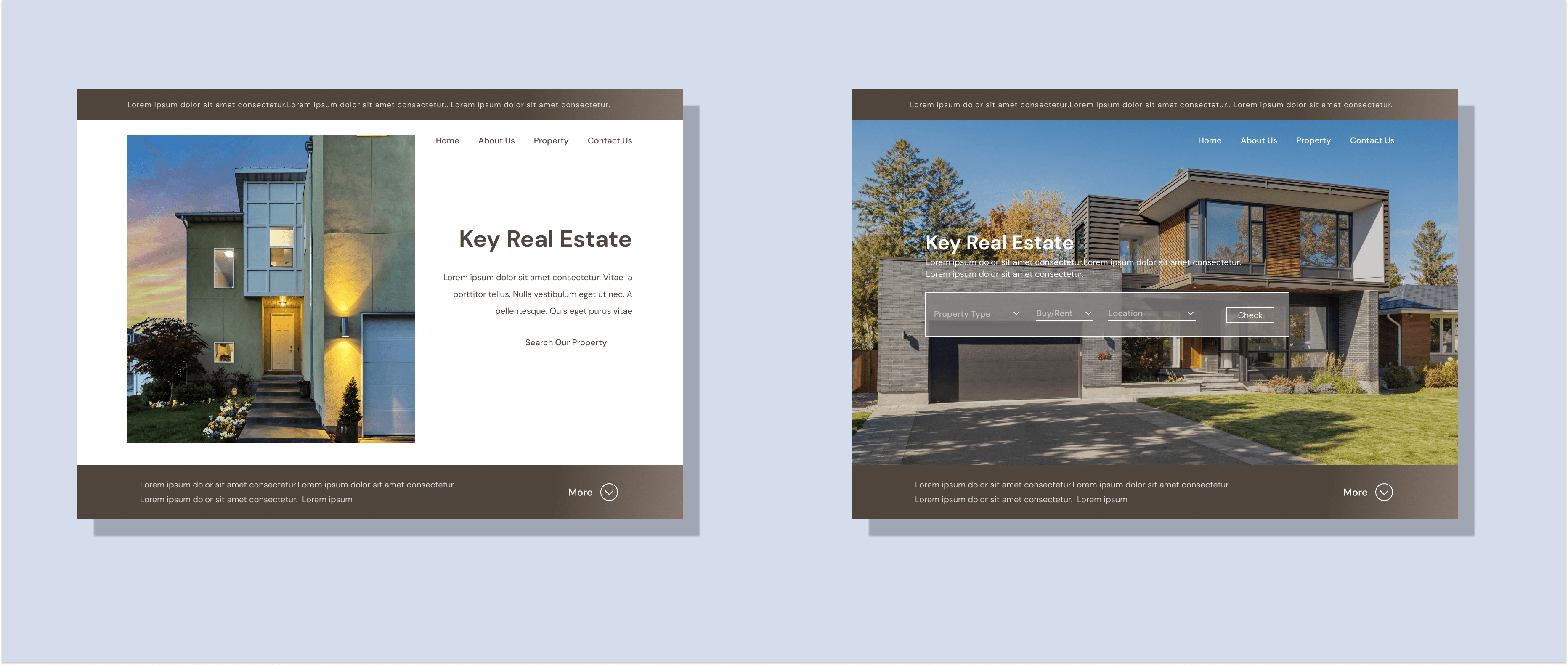
Two homepage hero approaches were tested: a split layout (property photography left, brand statement and search right — cleaner, immediate utility) versus a full-bleed hero (large-format property as background, wordmark and CTA overlaid — more emotionally immersive).
The test informed a key principle for the final design: lead with aspiration, surface utility immediately below. The final hero uses premium photography to establish desire, with the search bar appearing as the primary action in the first scroll — giving users both the emotional hook and the functional entry point within a single viewport.
In markets where the product category itself is new to many users, the design's first job is education. Every section on this platform teaches users something — about how properties are structured, about what to look for, about who builds what. That informational layer isn't separate from the UX. It is the UX.