Global Padel Hub
The leading platform for all things padel, connecting players, clubs, coaches and padel travel experiences globally.
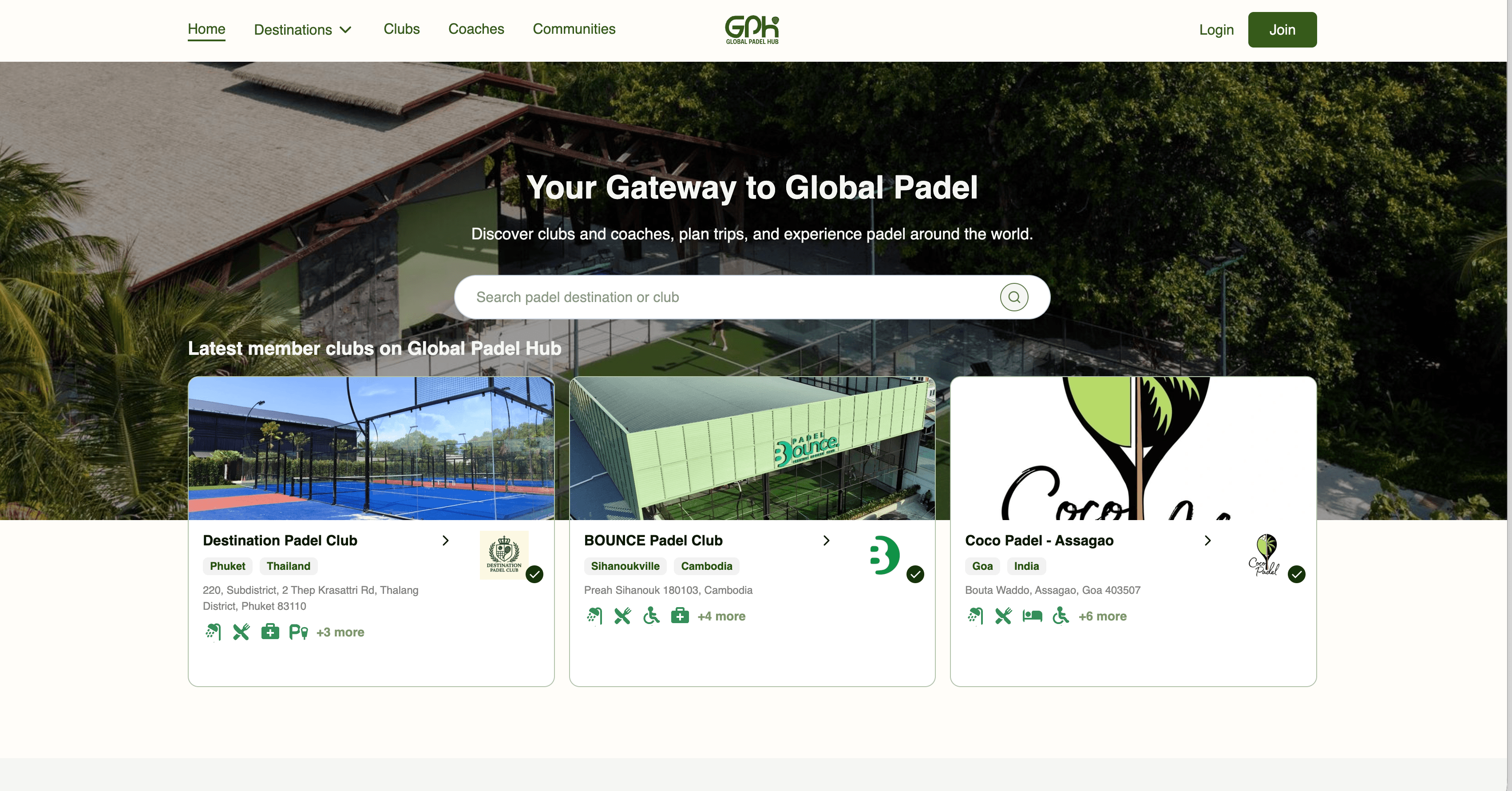
A discovery platform for the fastest-growing padel sport.
Global Padel Hub is an international directory and community platform connecting padel players with clubs, coaches, and communities worldwide. Built for a sport that has grown faster than almost any other in the last decade — and a global audience that expects the platform to match that energy.
I joined from the very beginning as UX/UI designer — shaping the product from the ground up. The platform needed to do three things well: help players discover what's near them, connect with the right coaches and clubs, and feel like it belonged to the premium, design-aware culture that padel attracts globally.
The sport was growing. Finding the right people and places wasn't.
Players struggled to discover clubs, coaches, events, and communities that matched their needs. At the same time, organisers lacked effective ways to increase visibility and reach new audiences.
Global Padel Hub set out to bridge both sides of the ecosystem through a scalable discovery platform designed for local communities and international travellers alike.
Creating a discovery platform for a rapidly growing sport.
Global Padel Hub needed to serve multiple user groups with different goals: players looking for places to play, travellers exploring new communities, and organisers promoting clubs, events, and coaching services.
The challenge was to create a scalable discovery experience that balanced usability, credibility, and business growth while supporting an expanding global audience.
How we reframed the problem.
From: "Build a directory." To: "Build a trusted discovery platform for the global padel community."
Design principles: Discover quickly. Build trust immediately. Support growth on both sides of the marketplace.
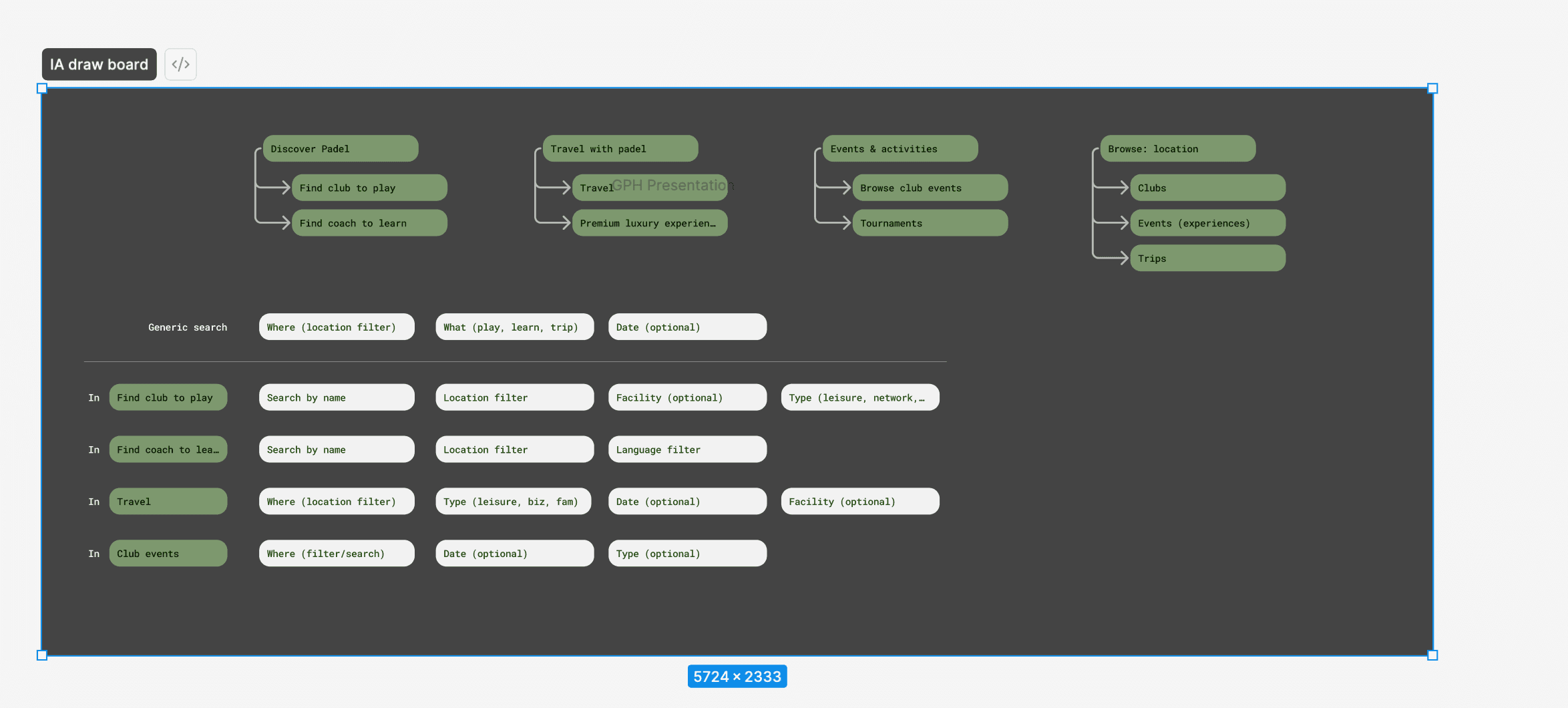
What players actually do.
- 01Players navigate by destination, not category
A user visiting a new city thinks "where can I play in Bali?" — not "find padel clubs." Navigation needed to lead with destination, not entity type.
- 02Verification signals drive trust
The verified badge was the single strongest trust signal in user feedback. It needed visual weight and consistent placement across every listing card.
- 03Amenity filters matter more than star ratings
Players care about showers, parking, equipment rental, restaurants — not abstract quality scores. Amenity chips became a primary UI pattern, not buried metadata.
- 04Coach language matching is a real pain point
Expats and travellers wanted coaches who spoke their language. Language pairing on coach cards became a required field, not optional metadata.
Reframing the platform around how players think.
Destination-first mega-nav
Main navigation separates destinations (Asia, Oceania) from entities (Clubs, Coaches, Communities), letting exploratory and intent-driven users find their entry point without friction.
Amenity chips as primary filter
Replaced generic search filters with visual amenity chips that mirror physical club features. Faster to scan, easier to compare, more honest about what each listing offers.
Verified badge as trust anchor
Positioned the verification signal with the same visual weight as the club name — immediately differentiating curated listings from community-added ones.
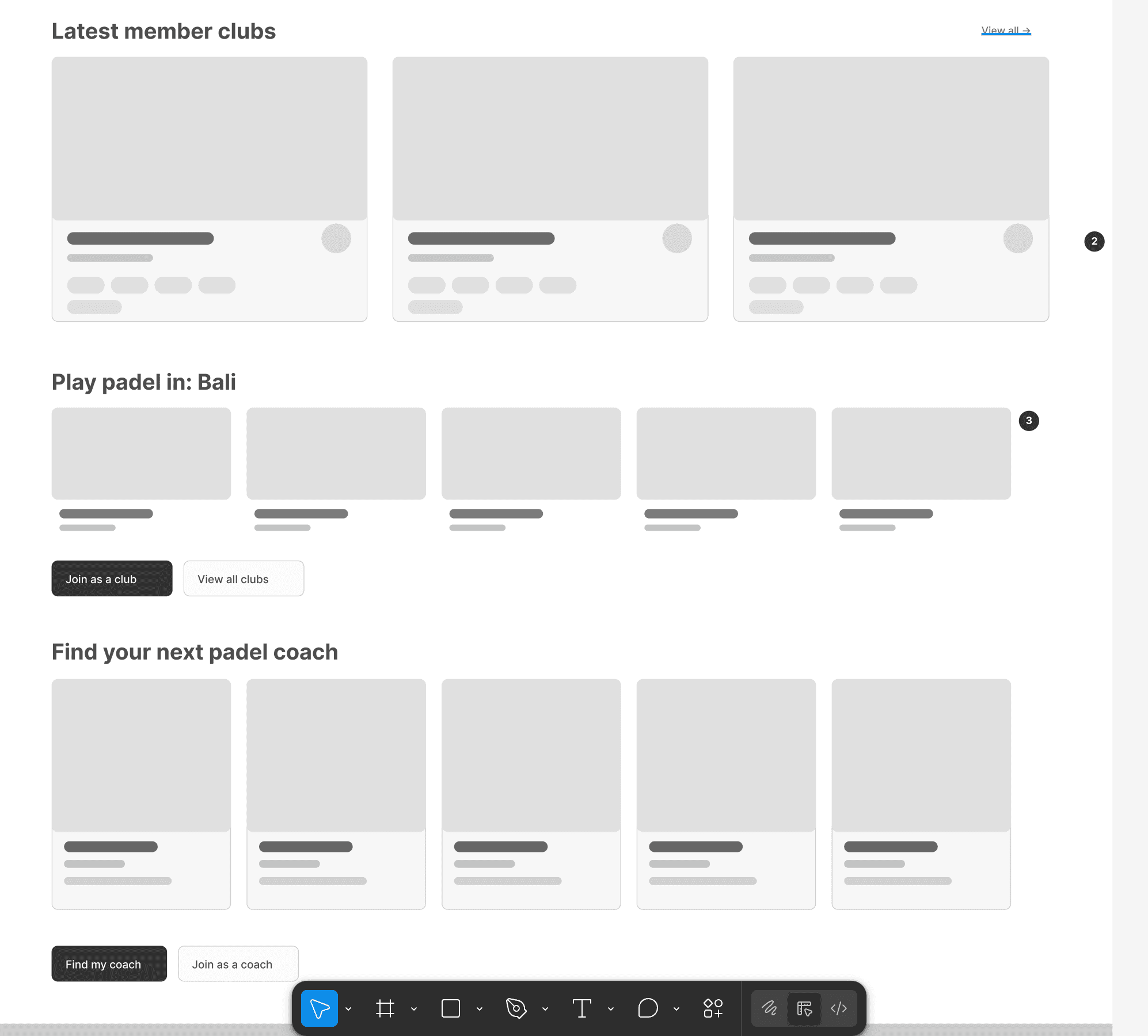
Padel is growing fastest in regions where the infrastructure for discovering it is still being built. GPH is that infrastructure — and good design is what makes it feel like it was worth building.