Most AI products I see do not have a model problem. The thing works. People try it once, cannot tell what to do with it, and never come back. That is a design problem with a revenue number attached.
The demo-day gap
A demo is the best possible input, run by the person who built it, on a screen they know by heart. Day seven is a tired user with a vague task and no idea what the product is good at. Nothing in the demo prepares the product for that.
The blank box problem
An empty prompt field is the most intimidating control in software. It asks the user to guess the capability, the phrasing and the scope all at once. Every hour a founder spends making the model smarter is wasted if the first screen never says what to ask it.
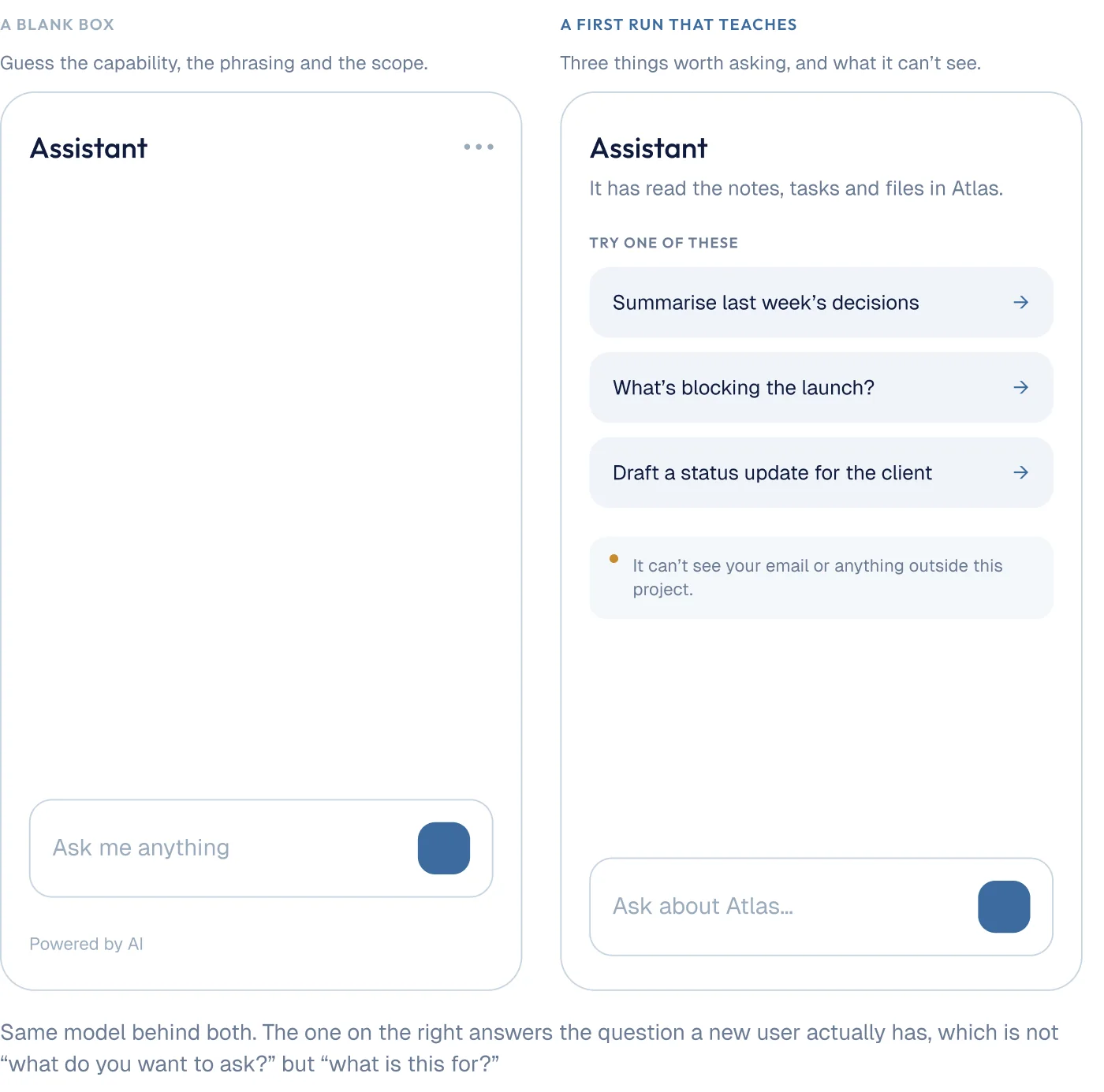
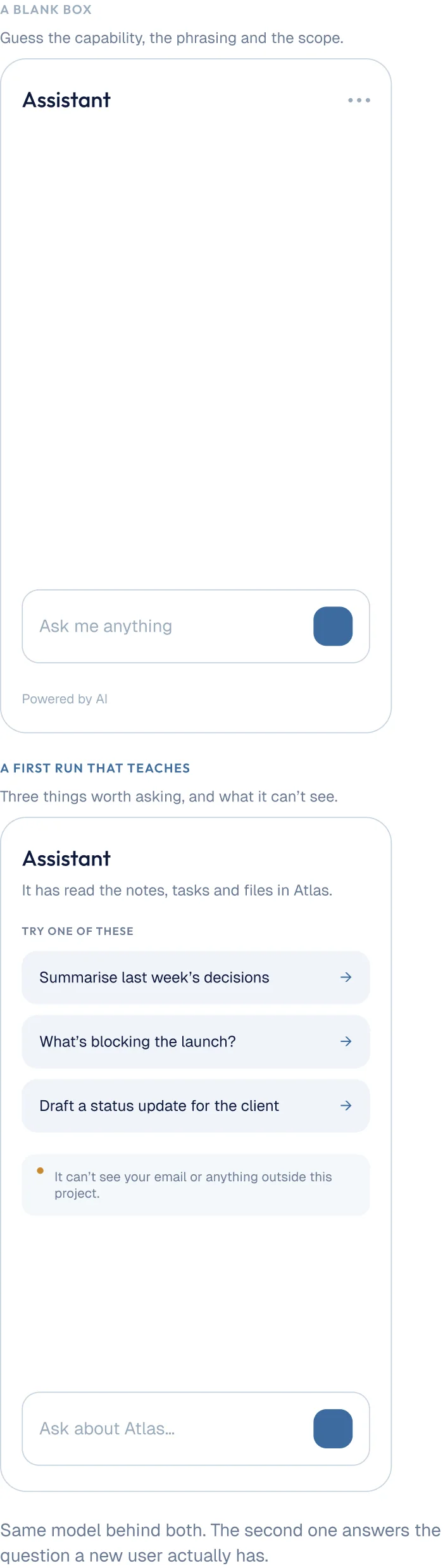
Nobody churns because the model was wrong. They churn because they never found out it was right.
Trust breaks once
People forgive a slow answer. They rarely forgive a confident wrong one, because after that they have to check everything, and checking costs more than doing it themselves. Design decides whether a wrong answer is recoverable or fatal.
What founders should measure
- Activation. Did someone reach a useful result in the first session?
- Day 7 and day 30 retention, not sign-ups.
- Regenerate rate. High means the first answer rarely lands.
- Edit rate. How much people rewrite what your product gave them.
- Time to first useful output, measured in seconds.
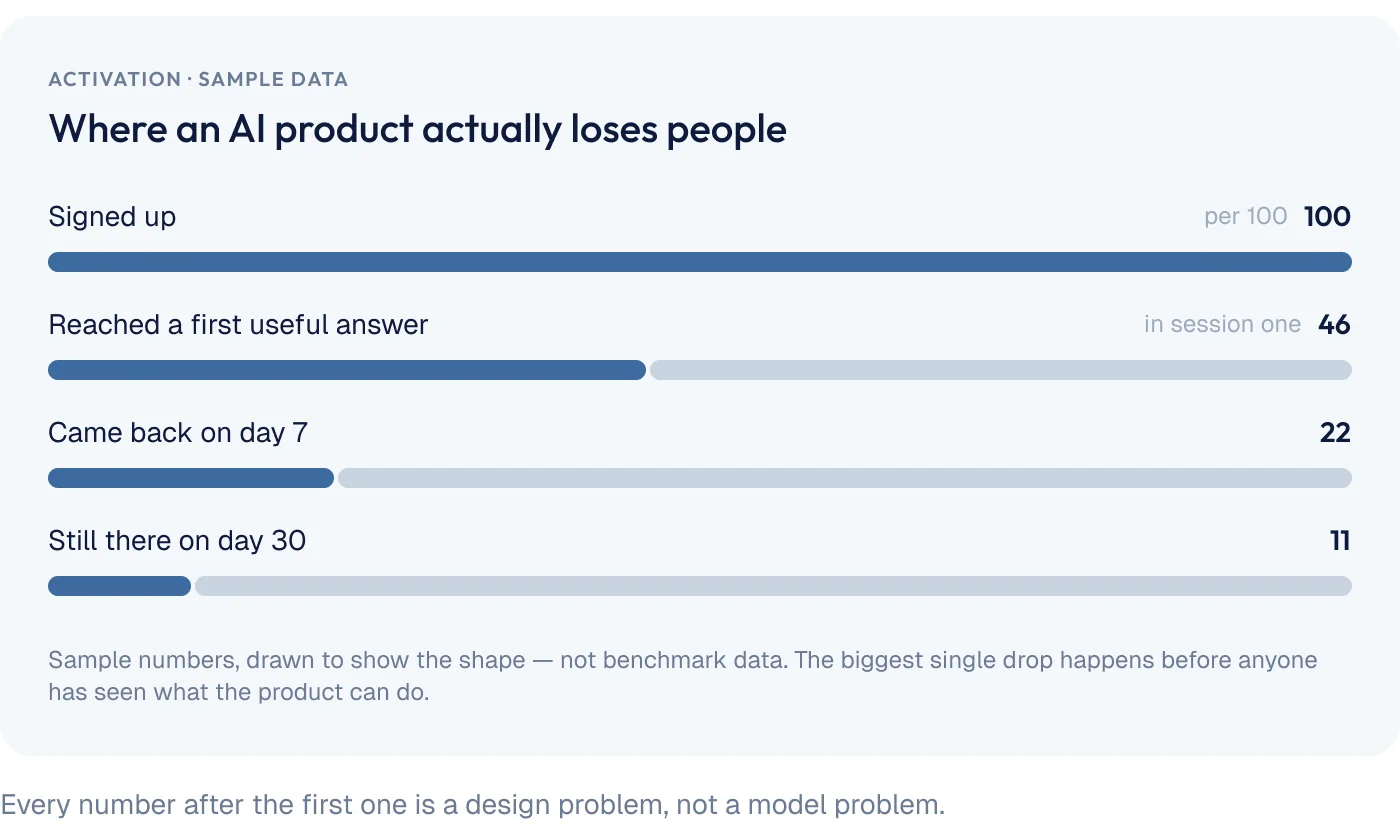
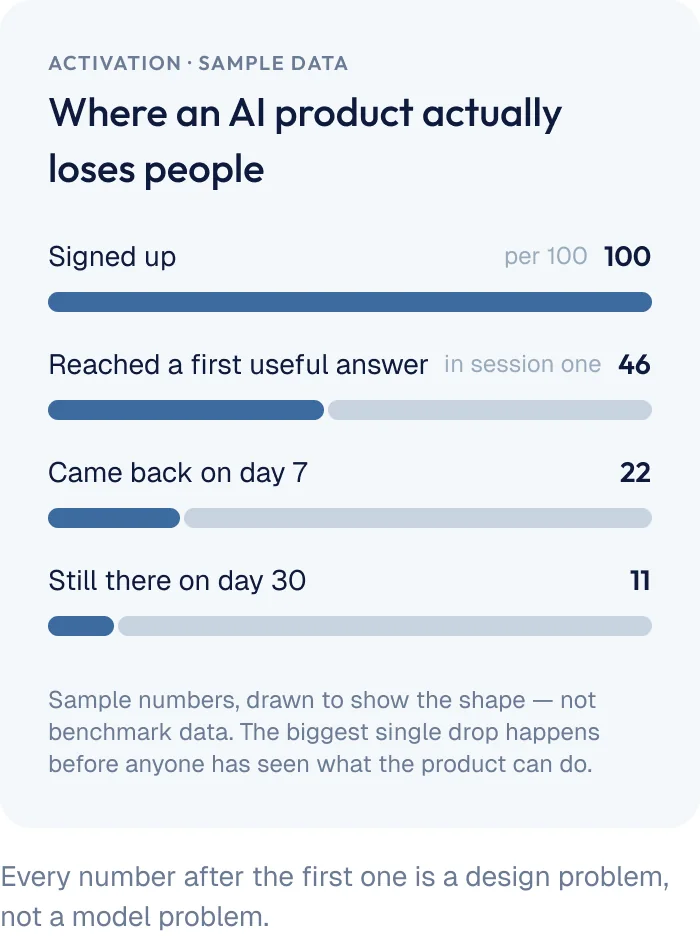
None of these need a better model to improve. They need someone deciding what the first screen says, what the empty state offers, and what happens when the answer is wrong.