A founder told me recently that he had stopped looking for a designer because the AI made screens that looked fine. He was right that they looked fine. Two months later he was paying an agency to work out why nobody was finishing sign-ups.
What founders think design is
Screens. Understandably, because screens are the part you can see. But screens are the output. The work is the decisions underneath: what this product is for, what it refuses to do, what happens when things go wrong, and which of those matters most this quarter.
The things nobody writes a prompt for
- The empty state on day one, before anyone has any data.
- What happens when the payment fails at 2am.
- The 40-character name that breaks the card.
- Which feature to cut so the other four are good.
- Whether the thing you are shipping is honest.
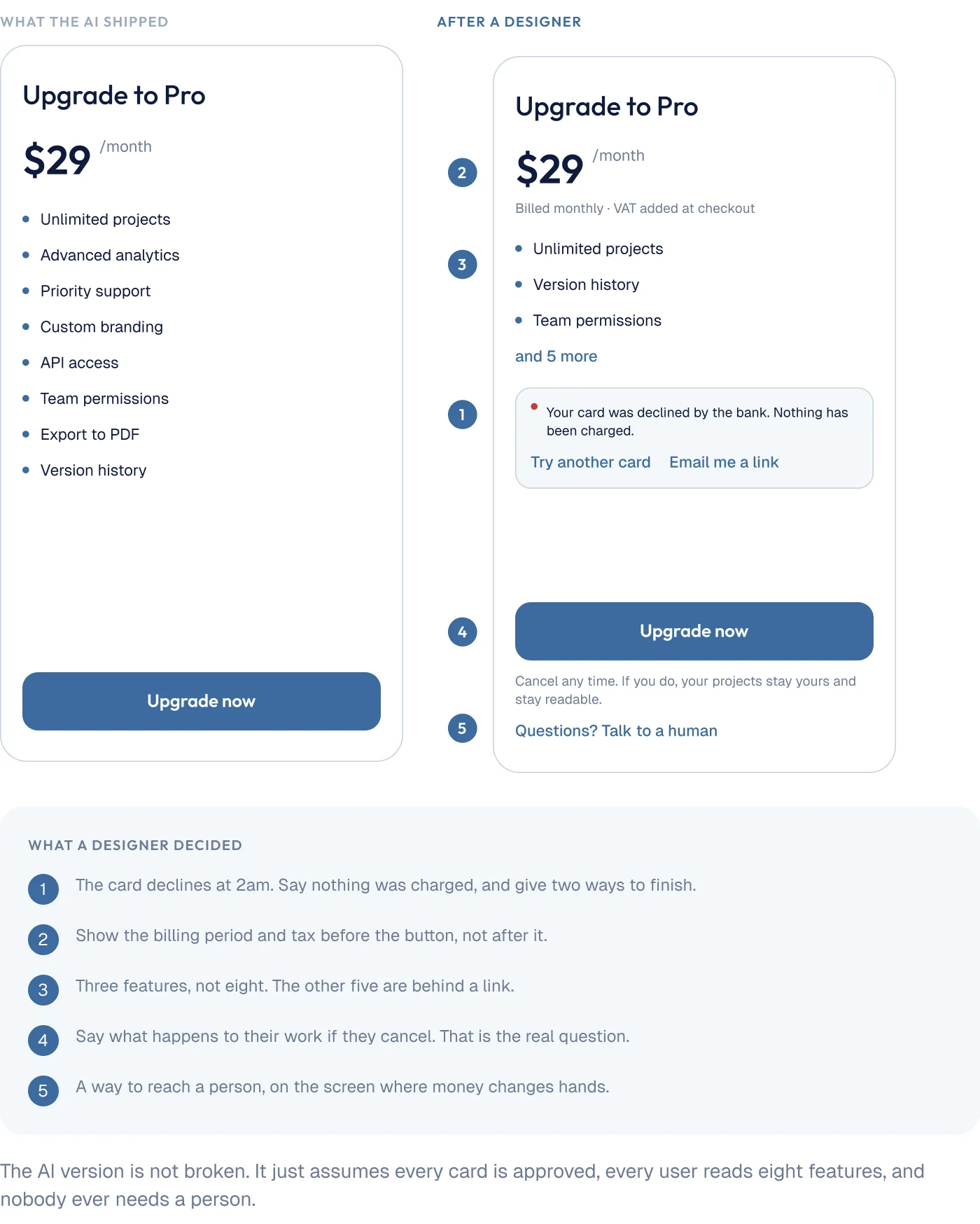
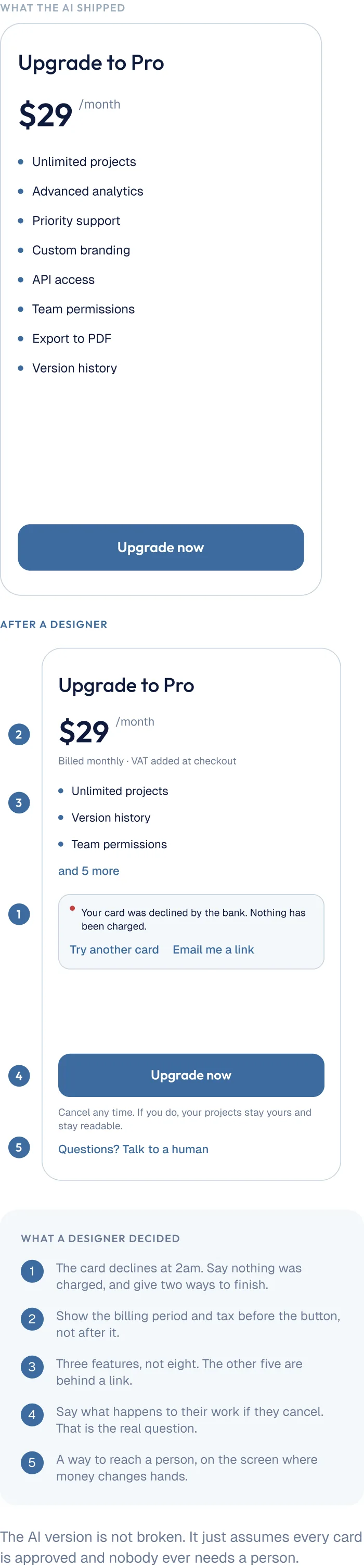
Design was never the screens. It was the decisions, and someone standing behind them.
The cost of skipping it
It rarely shows up as a design problem. It shows up as support tickets, as rework in the second month, as a funnel that leaks at one specific step nobody has looked at. Those are all cheaper to prevent than to diagnose.
When you honestly don't need a designer
If you are testing whether anyone wants the thing at all, do not hire me. Ship the rough version, talk to ten people, come back when the answer is yes. A designer is not a substitute for that conversation, and any designer who says otherwise is selling.
How it works now
The engagements got smaller and faster. Not six months of discovery: a week to frame the problem, a week to design the parts that decide trust, and a set of decisions your team can build against. That is what I do, and AI is why it can be that short.